


Highlights of New York Fashion Week
- bengisuturk
- Feb 22
- 5 min read
New York Fashion Week Fall’26 once again set the tone for the global fashion calendar, reaffirming its role as the opening act of fashion month and a barometer for what’s to come.
This season unfolded as a study in refined craftsmanship, identity-driven storytelling, and experiential runway innovation where unexpected venue choices, sculpted silhouettes, and controlled finishes reflected an industry negotiating wearability with conceptual depth. While the collections themselves were compelling, it was the strategic clarity behind them, the shifts in positioning, the recalibrated brand codes, the intentional staging that truly defined the week. Beyond the headlines and front rows, a few key moments signaled where American luxury is heading next. Let’s dive in.
Ralph Lauren: Textured Heritage Reframed
Ralph Lauren’s FW26 collection reaffirmed exactly why the house remains a cornerstone of American luxury continuity; it didn’t chase fleeting trends, it refined enduring codes. Rooted in rich texture and tactility, the runway was anchored by deep earth tones, layered tweeds, suede and velvet surfaces, and harnessed craftsmanship that felt palpably real.
Through deliberate layering - belts cinching coats, corset structures under tailoring, boots anchoring everything, the styling was phenomenal and foregrounded a narrative of utility meeting elegance. From textures to the silhouettes, everything spoke to longevity over trend and confidence over excess. In a moment when many brands chase spectacle, Ralph Lauren chose subtle power, demonstrating once again that American luxury thrives not on novelty, but on mastery of its own language.
"I love the adventure of fashion. That kind of renegade spirit and the confidence of the woman who will wear it in her own personal way - to tell her own story."
-Ralph Lauren


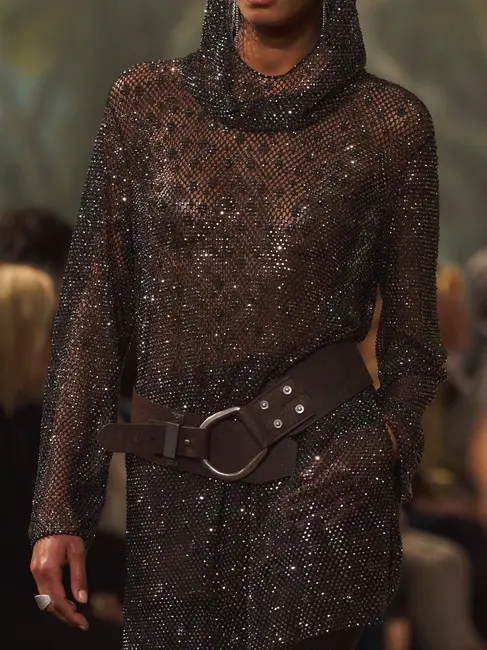


Images: Ralph Lauren FW26, NYFW Runway
Cult Gaia: Brooklyn Debut & Bridal Narrative
Cult Gaia’s first official NYFW runway marked a strategic cultural translation of the brand’s DNA, moving beyond its LA resort-rooted roots into the institutional and narrative weight of New York’s broader fashion conversation. Presenting in Brooklyn allowed Cult Gaia to position itself within a creative, artisanal context that speaks to cultural credibility and lived experience rather than mere spectacle, reinforcing that the house isn’t just joining the CFDA calendar, but laying claim to its voice within it. The collection, titled Shrizan, is the Farsi word for ‘’ lioness’’, balanced architectural tailoring, sculptural silhouettes, copper-toned textured, expressive pieces inspired by founder Jasmin Larian Hekmat’s Persian heritage. The bridal finale, a ruched white hourglass silhouette, became the defining moment of the show; its unexpected clarity subtly shifted the energy in the room, articulating fantasy and commerce in perfect alignment, positioning bridal as both emotional crescendo within Cult Gaia’s sculptural, romantic DNA.
The set design avoided theatrical excess, and focused on lightning that allowed silhouettes to command attention, while casting emphasized grounded strength. The overall mood felt immersive and ritualistic. This was a show built on narrative discipline, proving that Cult Gaia is not scaling through noise, but through coherence and emotional depth.


Images: Cult Gaia FW26, NYFW Runway, Credits: ©Launchmetrics/Spotlight
Zoe Gustavia Anna Whalen: Body as Narrative
There was something disarmingly personal about this show. As if we weren’t attending a runway, but stepping into a private ritual. The collection revolved entirely around the body. Corsetry felt less about control and more about awareness; draping followed movement rather than imposing shape. And then the bath finale came… Whalen stepping into water at the runway’s edge didn’t read as shock, it read as release. A cleansing, a reset, a deliberate statement that vulnerability is not weakness but authorship. The runway became an intimate theater, where the audience wasn’t just observing fashion but witnessing it.
What made this collection powerful was its refusal to separate commerce from emotion: in an industry that often armor the body, Whalen exposed it, physically and conceptually.
"I feel I’m in this transitional point in my practice where I’m at the beginning of a new rebirth; the beginning of a new chapter."


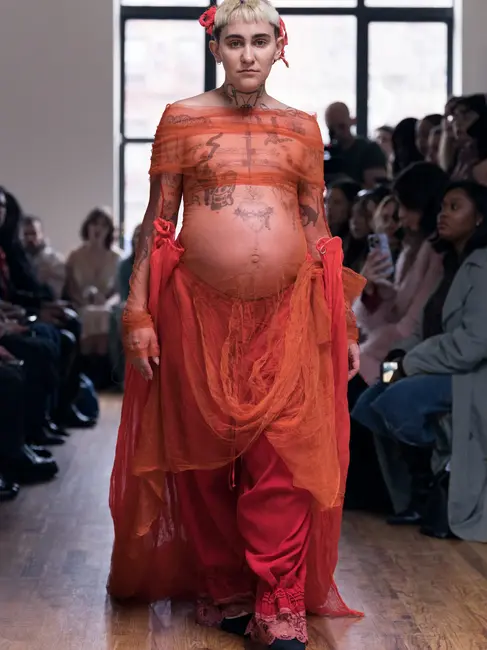

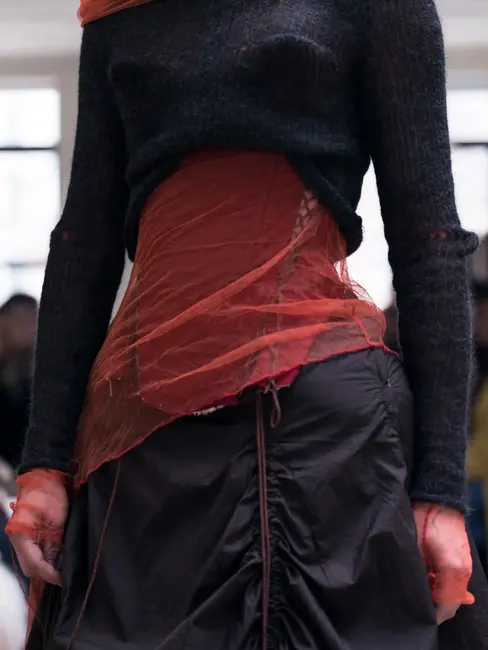

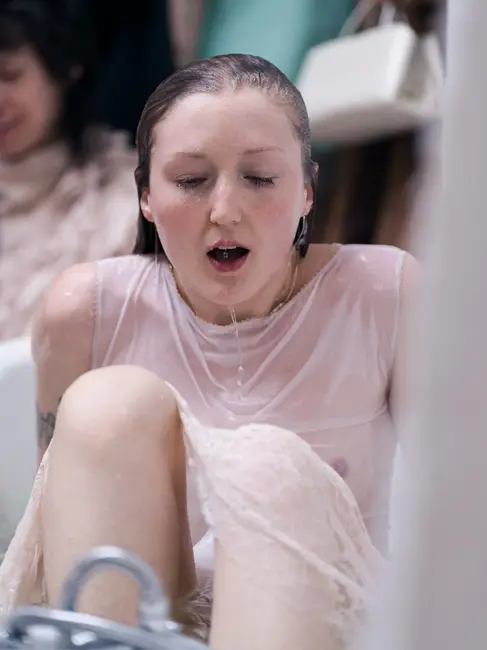
Images: Zoe Gustavia Anna Whalen FW26, NYFW Runway
Calvin Klein: Hedonistic Elegance across Minimalism
A year after her debut, Veronica Leoni sharpens the new era of Calvin Klein with a collection that merges modern minimalist tailoring and subtle ’70s–’80s sensuality. Framed around what the house calls “hedonistic elegance,” she calibrates a precise tension between indulgence and restraint, where reductionist cuts meet controlled, seductive details without losing composure.
Silhouettes were tall, lean, and deliberately precise; torso-hugging suits, subtle open backs, and architectural dresses balanced provocation with control. The tailoring felt unmistakably Calvin Klein: clean lines, sharp shoulders, and elongated proportions that translated everyday minimalism into contemporary luxury. The palette stayed grounded in stark monochrome neutrals; black, ivory, greige, interrupted only by controlled hits of burgundy and tangerine that injected sensual depth without breaking the minimalist discipline, where restraint becomes seductive and minimalist precision becomes a vehicle for modern sensual confidence.
CK's FW26 wasn’t just about less-is-more, it’s about less with intent, and more with purpose.


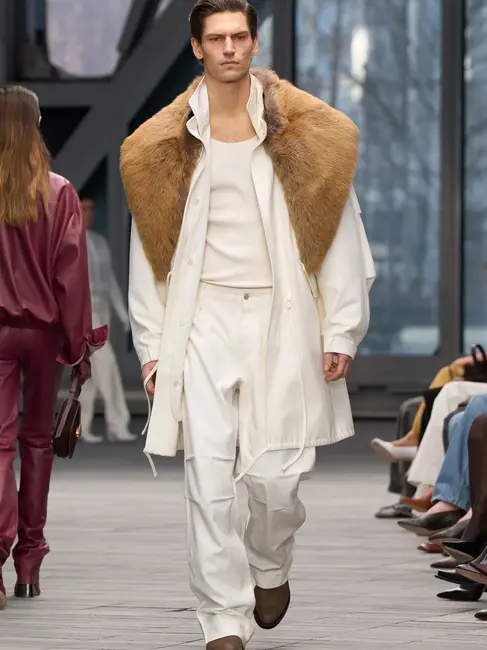


Images: Calvin Klein FW26, NYFW Runway
Marc Jacobs: Structural Restraint & Quiet Drama
At Marc Jacobs’s FW26 show, titled “Memory, Loss,” and staged inside the cavernous Park Avenue Armory, the collection unfolded as an exploration of how memory shapes identity, both personal and sartorial . Drama emerged not from embellishment but from structural restraint and deliberate proportion play: ballooned volumes, widened silhouettes, and dresses that stood slightly away from the body, as if suspended between past and present.
The collection’s quiet irony came from its refusal to indulge in spectacle, instead of flamboyant theatrics, Jacobs leaned into memory work: referencing past design epochs (from early grunge tailoring to ’90s minimalism) and recasting them through intellectual means, creating a runway that felt reflective rather than performative.
This balance between dramatic proportions and conceptual restraint positions Marc Jacobs not as a relic of nostalgia nor a maximalist provocateur, but as a brand that uses irony and cultural dialogue to deepen emotional engagement, a subtle yet powerful repositioning in a season crowded with headline-seeking spectacle.

Image: Marc Jacobs FW26, NYFW Runway
Khaite: Runway Design
Khaite transformed the Park Avenue Armory into more than a runway, it became an immersive stage that mirrored the collection’s minimalist, sculptural sensibility. Catherine Holstein and her team installed a sweeping LED wall and expansive staging that enveloped guests before a single look hit the catwalk, immediately grounding the show in a cerebral yet emotional atmosphere that invited participation rather than passive viewing.
The collection itself leaned into pared-back luxury with sharply tailored jackets, lean trousers, and dresses whose fluid lines echoed the space’s scale, creating a seamless dialogue between garment and setting.
Holstein’s choreography of space and silhouette underlined Khaite’s evolving language: minimalism as modern monumentality, where every piece feels both intimate and commanding.

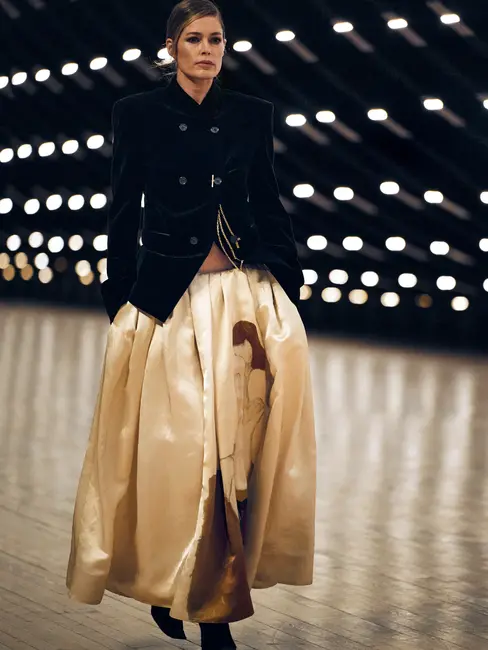


Image: Khaite FW26, NYFW Runway
7 For All Mankind: Where Memory Meets Margin
7 For All Mankind’s runway marked a defining strategic pivot under newly appointed creative director Nicola Brognano, as the premium denim label stepped onto the NYFW stage with its first full runway show and a refreshed cultural agenda. Rooted in denim heritage but propelled by a contemporary reinterpretation of early-2000s Y2K attitude, the collection redefined femininity with confidence and edge, rock-and-roll energy collided with bohemian sensuality through sharp proportions, skinny non-stretch denim, micro minis, layered knits, and lived-in vests that felt both nostalgic and forward-thinking.
This runway wasn’t just a revival; it was a strategic rearticulation of 7 For All Mankind’s identity, leveraging cultural memory to expand relevance beyond denim, appealing to both nostalgic millennials and fashion-savvy Gen Z while anchoring the brand in emotional resonance and commercial potential.


Image: 7 For All Mankind FW26, NYFW Runway
The Season of Intent
NYFW26 didn’t feel like a season chasing trends, it felt like a recalibration of power. The most compelling houses understood that drama can be quiet, sensuality can be disciplined, and heritage can evolve without losing authority. Across runways, we saw brands refining their codes rather than rewriting them, choosing proportion over provocation and narrative over noise. If this season signaled anything, it’s this: the future of American luxury belongs to those who know exactly who they are, and aren’t afraid to show it with precision.


Comments